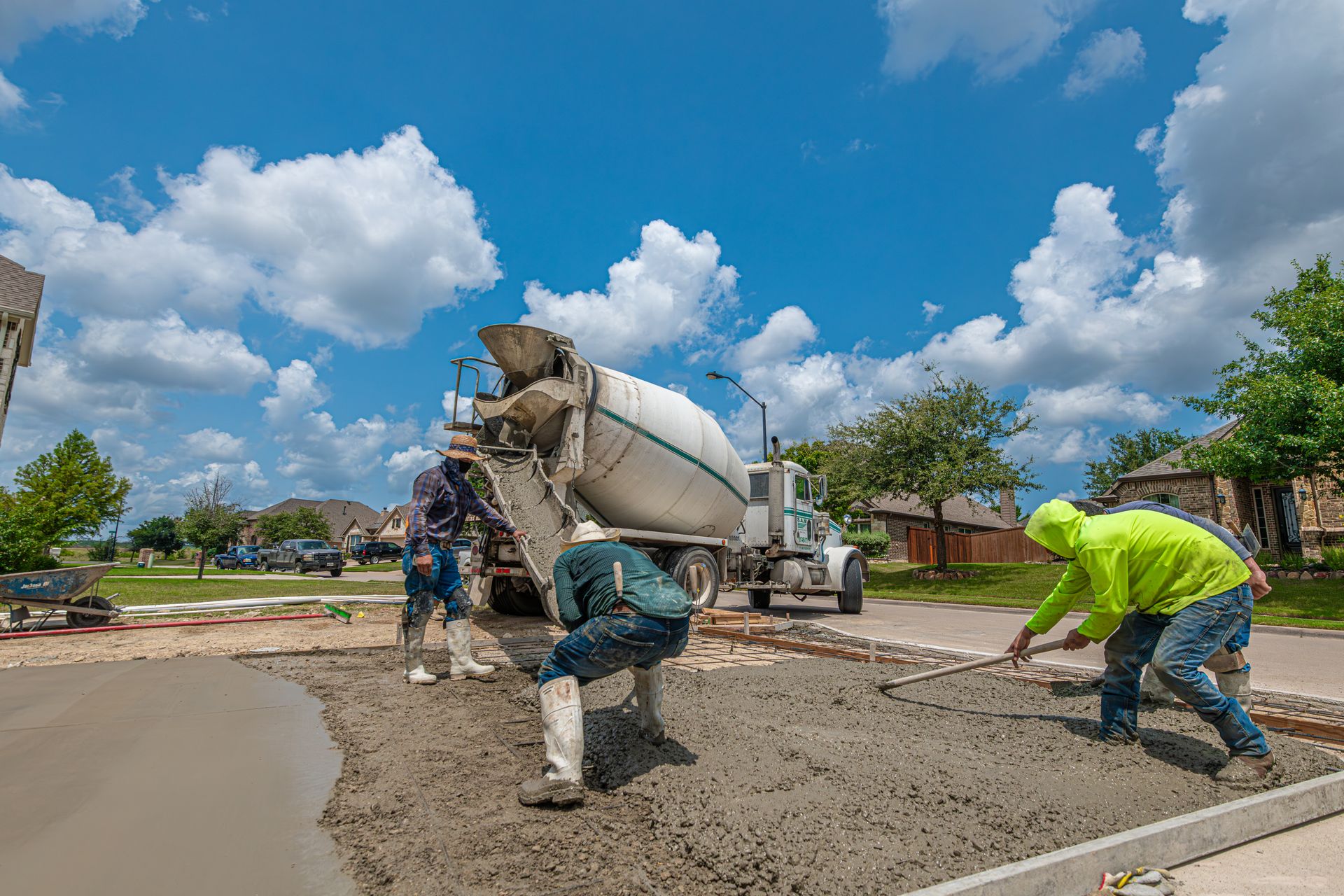
Can concrete be poured in winter in Aurora?
Concrete can be poured in cold weather, but it must not freeze before it gains strength. That means a thawed, frost-free subgrade, a suitable mix — often with accelerators — and insulated blankets or heated enclosures while it cures. For driveways, patios and walkways around Aurora, most homeowners are better served by waiting for spring; winter pours are mostly for footings and commercial schedules that can't wait.
Can asphalt be paved in the rain?
Asphalt should not be laid in steady rain. Water on the base or in the mat cools the hot mix too fast, stops it bonding and leaves a weak, porous surface that fails early. Light drizzle on a well-drained base may be workable, but most crews in Aurora reschedule. Hot-mix also needs warm enough air and ground temperatures to compact properly, which is why paving around York Region is usually done from spring to late fall.
What affects the cost of a driveway in Aurora?
Driveway cost in Aurora comes down to five things: the size in square feet, whether old concrete, asphalt or interlock has to be removed and hauled away, how much granular base is needed, the surface and finish you choose, and site access for equipment. Sloped lots, drainage corrections and permits add to the scope. Asphalt usually costs less per square foot than concrete; stamped or exposed-aggregate concrete costs more than a broom finish. A written, itemized quote after an on-site measure is the only reliable number — be wary of prices given without anyone seeing the property.
How do I know if my driveway needs repair or replacement?
Hairline cracks and surface wear can usually be sealed or resurfaced. Wide, spreading cracks, potholes, sunken sections, heaving and water pooling against the house usually point to a failed base, and patching that will not last. If more than about a quarter of the surface is damaged, or the driveway is near the end of its life, replacement in Aurora is often better value than repeated repairs. An on-site look settles it.