Can asphalt be paved in the rain?
Asphalt should not be laid in steady rain. Water on the base or in the mat cools the hot mix too fast, stops it bonding and leaves a weak, porous surface that fails early. Light drizzle on a well-drained base may be workable, but most crews in Guelph reschedule. Hot-mix also needs warm enough air and ground temperatures to compact properly, which is why paving around Wellington County is usually done from spring to late fall.
Asphalt vs concrete vs interlock pavers — which lasts longest?
Concrete typically lasts longest with the least upkeep when it is reinforced, jointed and built on a proper base. Asphalt is cheaper and quicker, flexes with frost and is easy to patch, but needs sealcoating every few years. Interlock pavers look great and individual stones can be replaced, yet they shift and weed over time if the base and edge restraints are poor. In Guelph, the base matters more than the surface: any of the three fails early on a thin base.
Do concrete contractors work on small jobs?
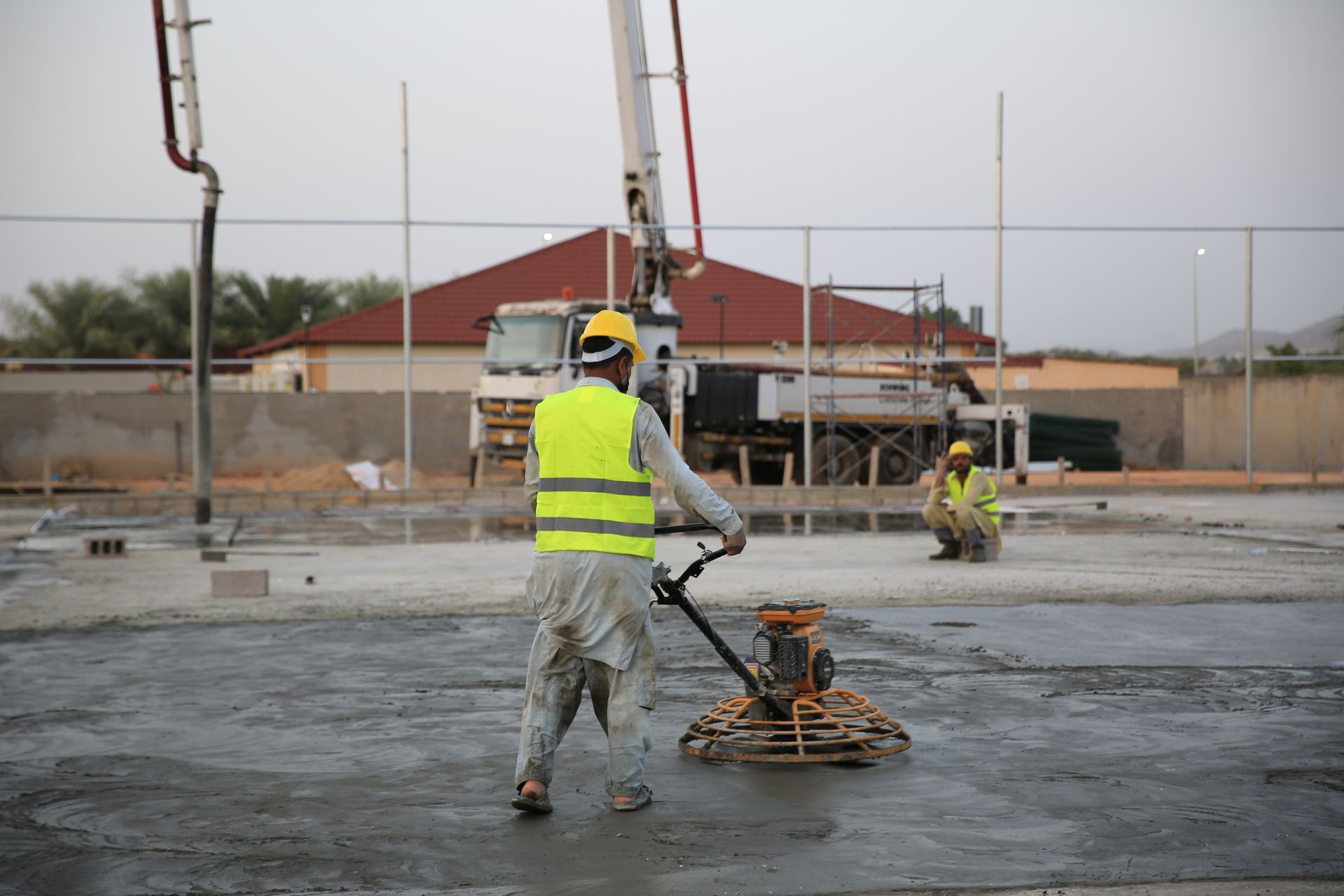
Yes. Small jobs — a few steps, a landing, a walkway section, a pad for a shed, AC unit or hot tub, or a short sidewalk repair — are common across Guelph. They are quoted the same way as bigger work: measure, scope and a written price. Bundling small repairs together, or with a larger driveway or patio job, usually lowers the cost per square foot.
What affects the cost of a driveway in Guelph?
Driveway cost in Guelph comes down to five things: the size in square feet, whether old concrete, asphalt or interlock has to be removed and hauled away, how much granular base is needed, the surface and finish you choose, and site access for equipment. Sloped lots, drainage corrections and permits add to the scope. Asphalt usually costs less per square foot than concrete; stamped or exposed-aggregate concrete costs more than a broom finish. A written, itemized quote after an on-site measure is the only reliable number — be wary of prices given without anyone seeing the property.